Introduction
From May 2018 users will be required to proactively opt-in to marketing messages in order for companies to contact them with personalised data.
GDPR (General data protection regulation) was a legal requirement based project. At the time this was presented to the design team as ‘we need a preference centre’. However, we already had a preference centre, and the real opportunity arose for what we as designers could do in order to look at this project as an opportunity rather than purely being solution focused.
Problem statement
By May 2018 we will need to be compliant with GDPR by users proactively subscribing to marketing messages.
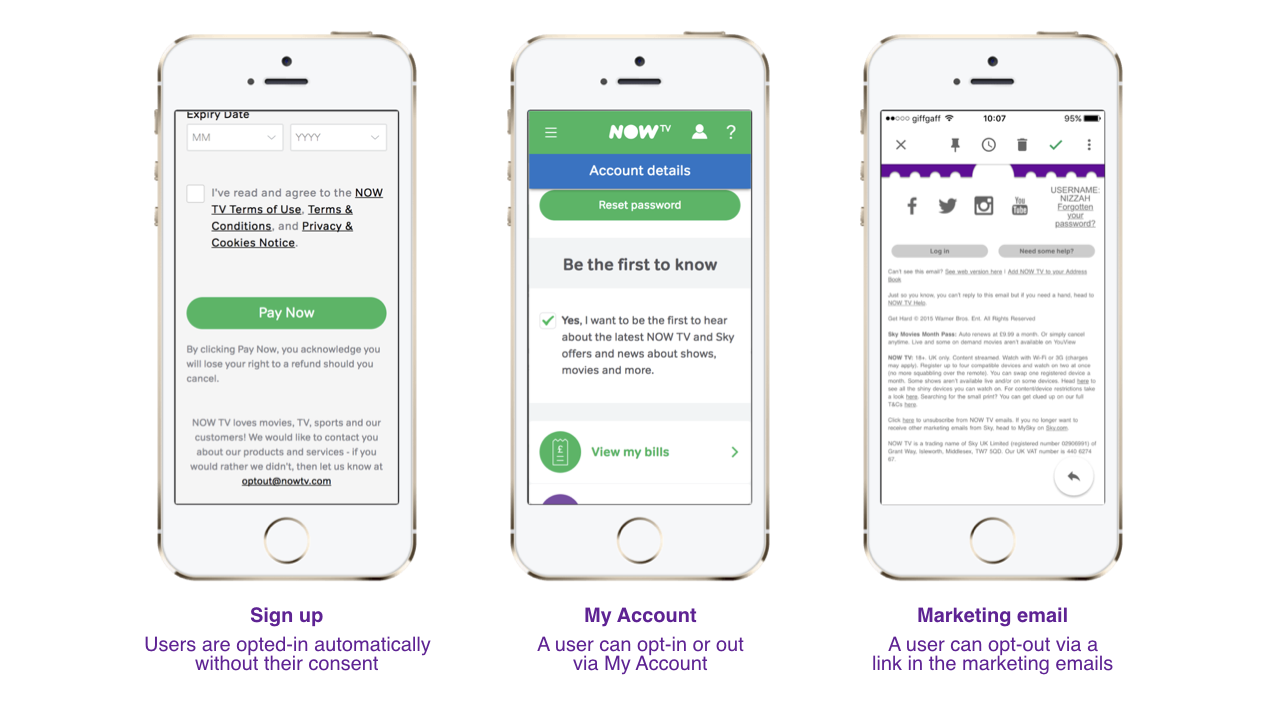
Currently users are automatically subscribed to marketing messages, which will be massively impacted by May 2018.
Current
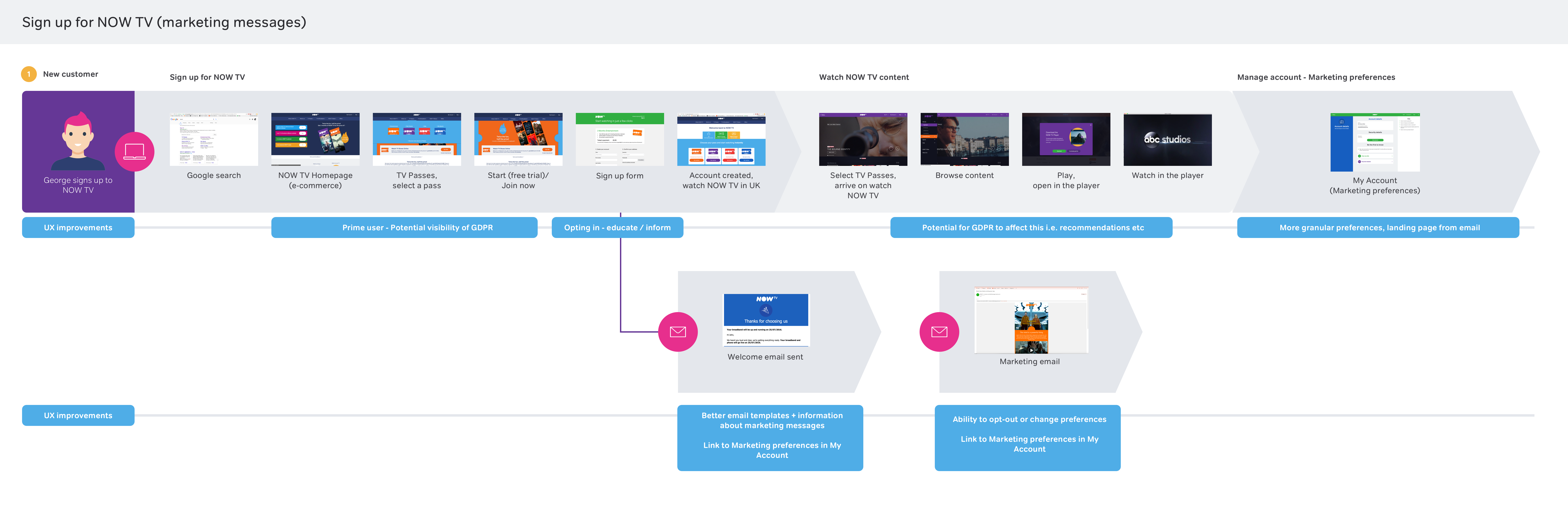
The current setup of NOW TV covered three main areas: Sign up, My Account and Marketing emails. These areas were identified in order to investigate what would be required to be compliant, however there were other areas that had potential opportunities to explore.
Objectives
Be compliant with the new regulations
Being compliant is our critical goal that we must meet
Team: Compliance
Keep the purchase journey simple
Customers need to be able to make purchases easily and quickly
Team: Sales and eCommerce
Encourage customers to sign up to marketing messages
Ensure that the majority of customers sign up to marketing messages
Team: Customer Marketing
Internal analysis
When approaching this project the main question that I came up with and used was: How does subscribing to marketing messages make my NOW TV experience better?
Design studio workshop
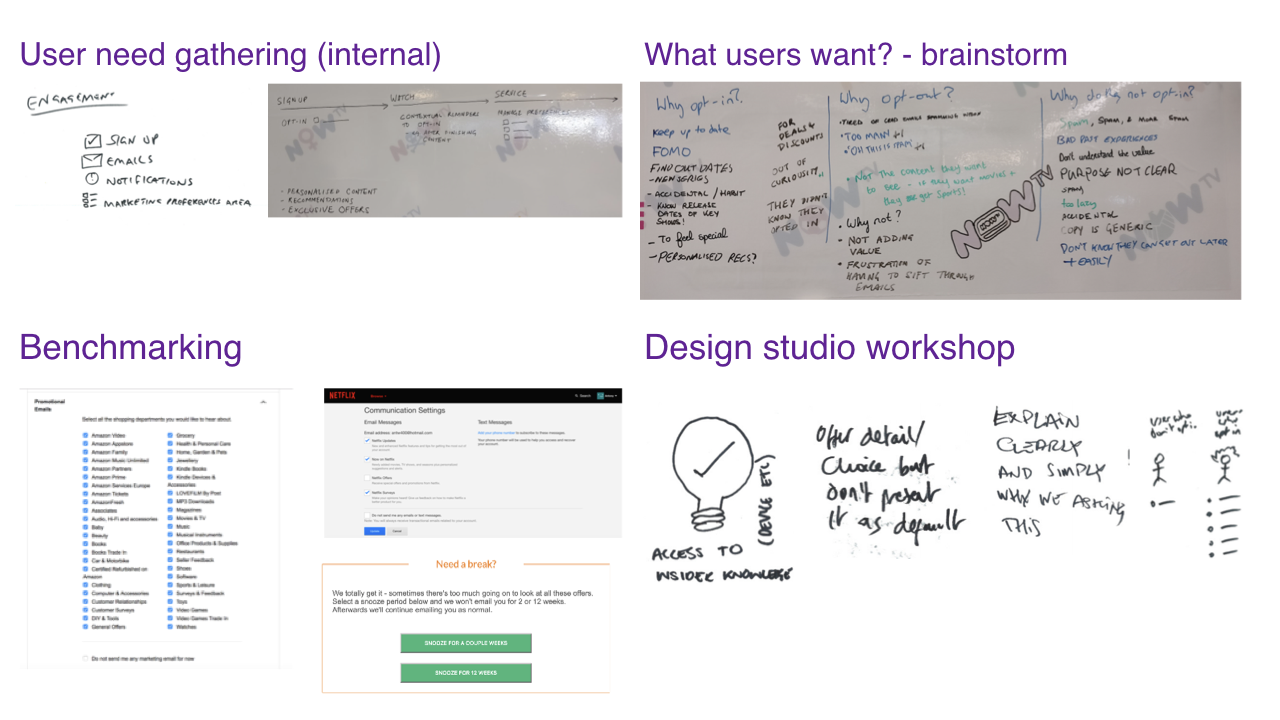
As a starting point for most of my projects I begin with a design studio workshop (collaborative design workshop) in order to align. This workshop consisted of the project manager, business analyst, tech lead, copywriters and UX design.
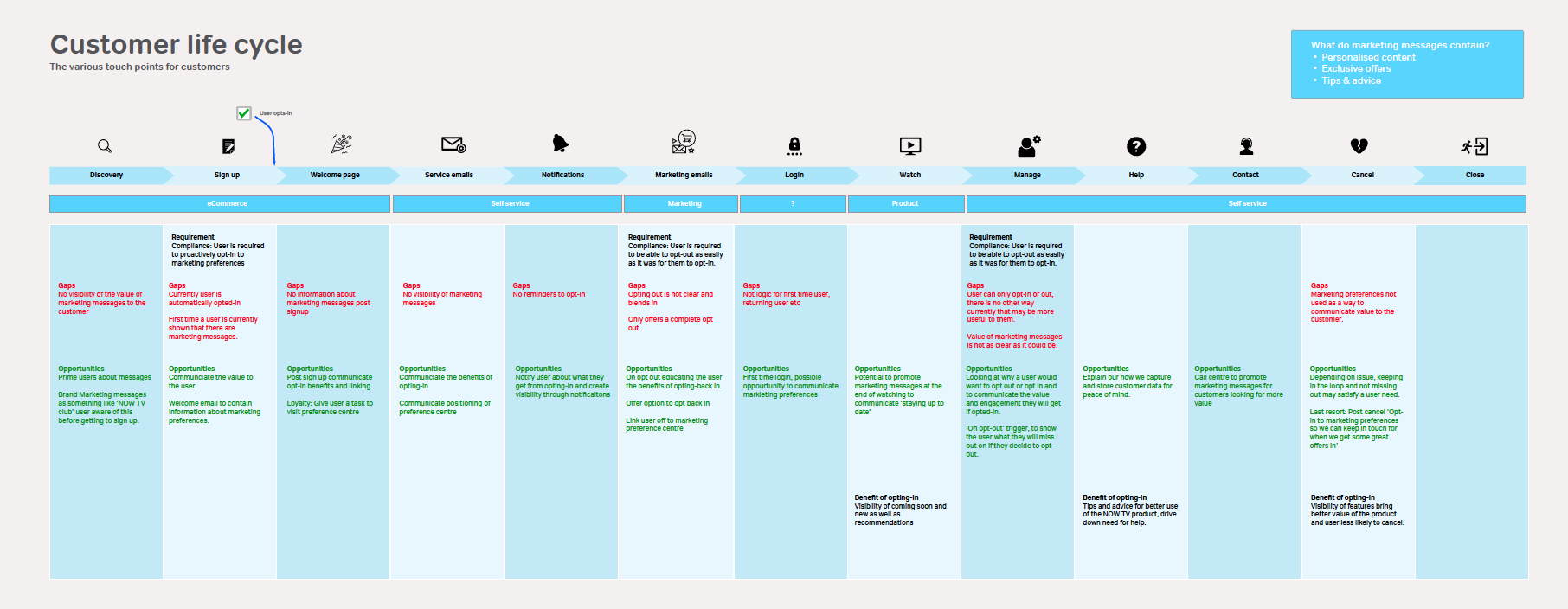
Through this workshop we created a multitude of ideas which were then used for further activities. Most specifically creating a Customer Life Cycle map, which captured all the various touch points of a user and the opportunities for the project.
User journey
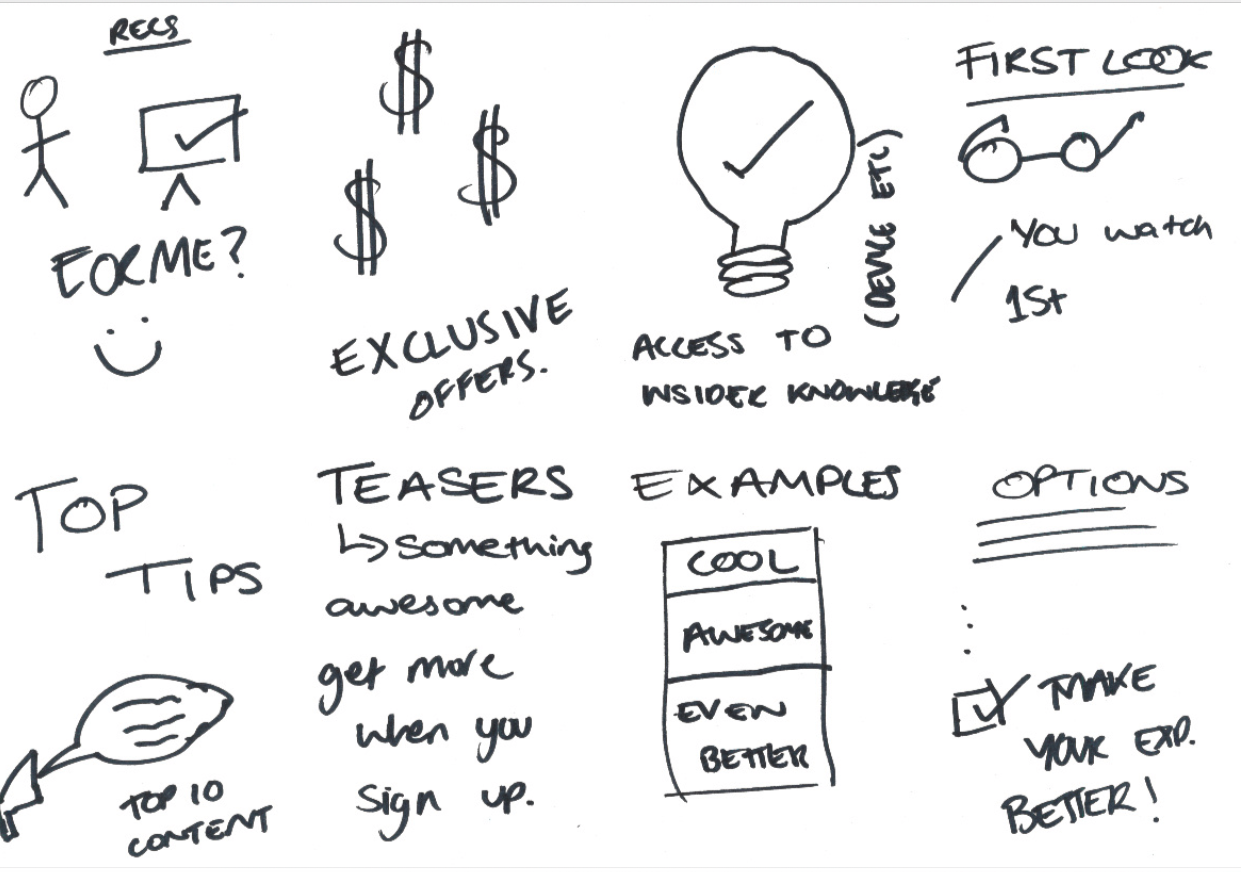
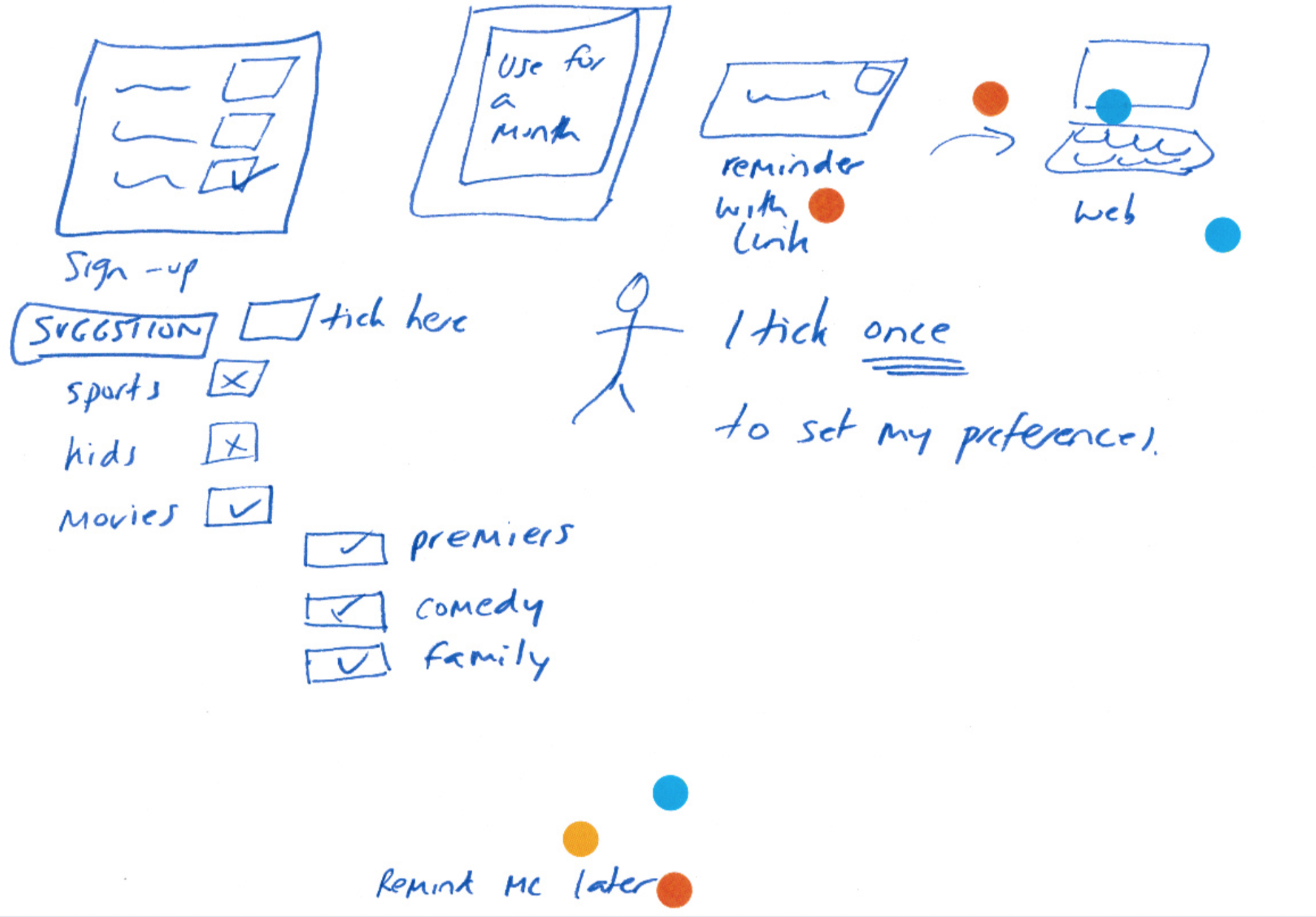
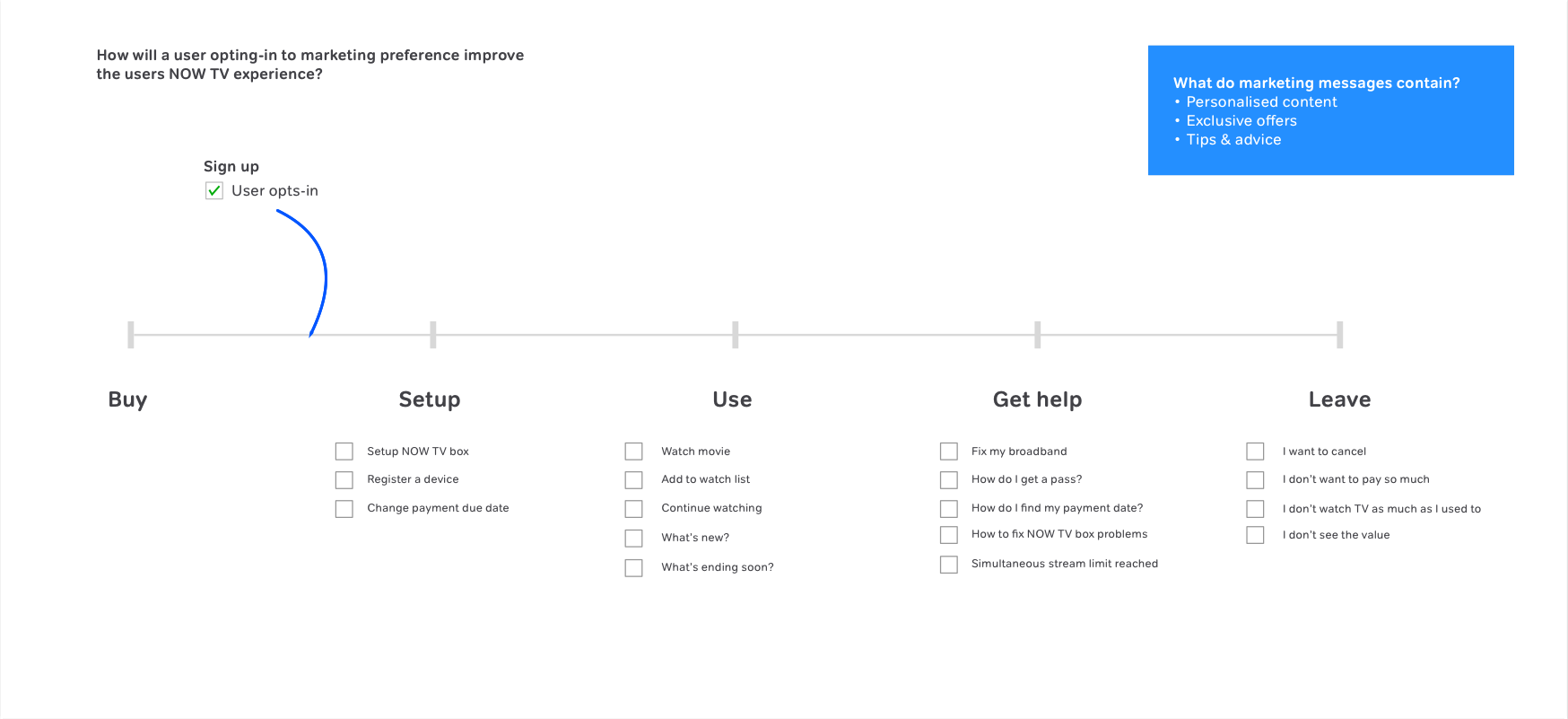
Based on the design studio workshop I plotted a quick linear journey identifying some of the captured idea into the current context. This acted as a high level journey which then later fed into the basis of the Customer Life Cycle map.
Customer Life Cycle
Mapping out all the areas of NOW TV that a user would go through with their time at NOW TV. This template was then used in future for other projects. The main objective was to begin to plot the gaps and opportunties for the GDPR project based on the initial collaboration in the design studio workshop.
- All points were outcomes from workshops, meetings or feedback from everyone involved with the project i.e. marketing managers, developers, designers, compliance, ecommerce
- Validated the different areas and overall order by the various teams around NOW TV as well as previous research
- Later to would validate the opportunities with user interviews
Principles
The outcomes from the Studio Design workshop provided themes that were then used as principles agreed with by the team. These would be then used as the agreed approach toward the solution.
Ensure relevance
Messages need to be relevant to the user. If they are not relevant then they are of no use to the user.
Show value
Value leads to motivation.
Without motivation the customer will not act.
Be honest
Understanding of what exactly they are signing up for. What do you do with my data?
Let the user be in control
To be in control for less risk of opting-out.
High level
At the beginning I looked at a high level view of the different areas that the solution would need ultimately to be successful. Users are not stupid, they need clarity of what they are ultimately opting-in to, and also as the GDPR law began getting closer and closer, more and more news articles were around GDPR and what it meant. Ultimately our users would know what is going on, and we could not underestimate this.
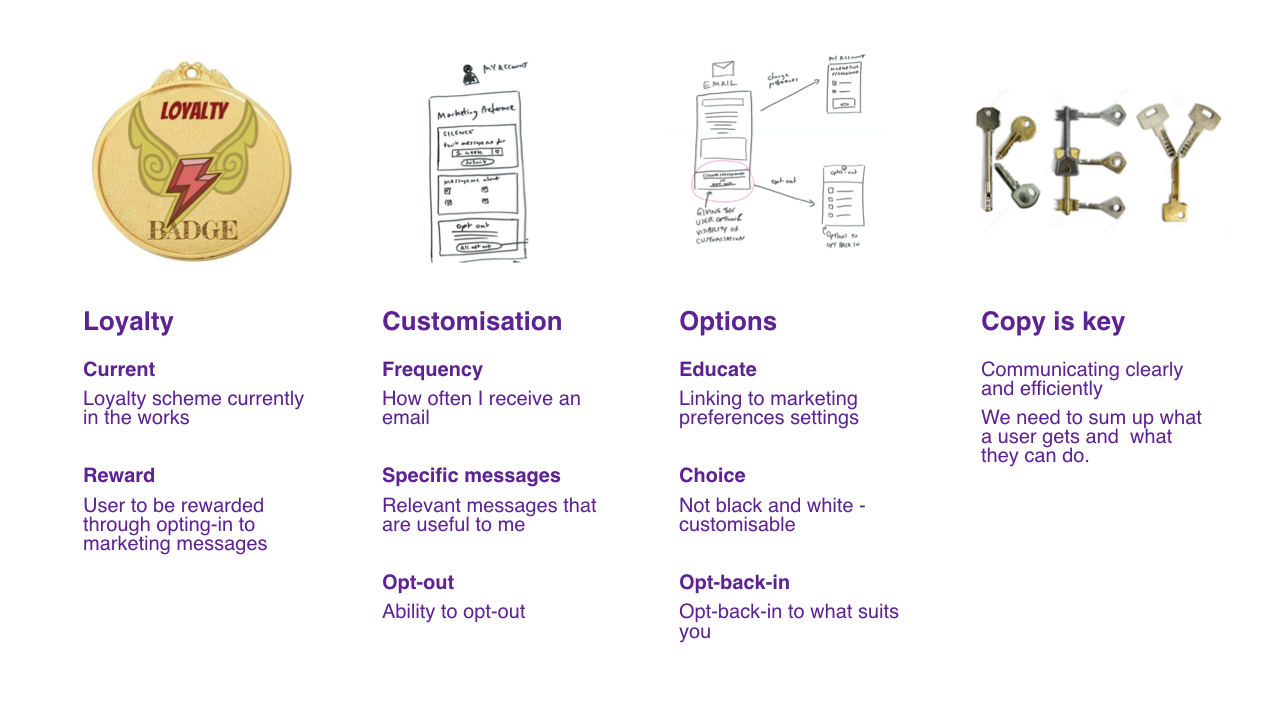
These four areas would be the possible approaches to be taken. NOW TV had a potential loyalty project going on where there was an opportunity to leverage users into the loyalty scheme by aligning it to opting-in to marketing preferences. Secondly, giving the user customisation would be a better way of making the messaging more specific, which would give users better value. The third area would be choice, meaning the user could be educated and given choice of what they would require. Finally, the copy would be key. If we confused our users or were vague, this would lead to a low opt-in rate.
Concepts
The next step was to begin conceptualising. The first area of interest was looking at the existing preference centre which only allowed opt-in or out. Going through what we extracted from the various activities there were six different concepts created.
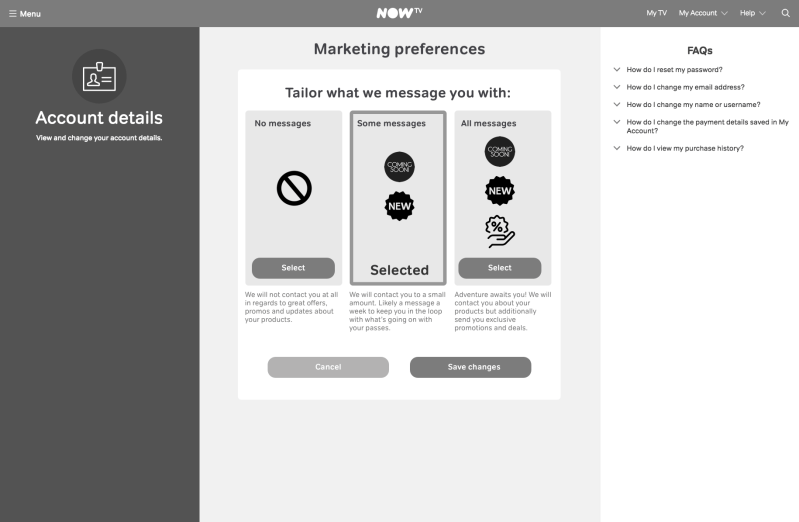
1. Tailored messages
Pros
- Landing page from deep links
- Gives the user the option to not completely opt out
Cons
- Dependant on granularity of messages
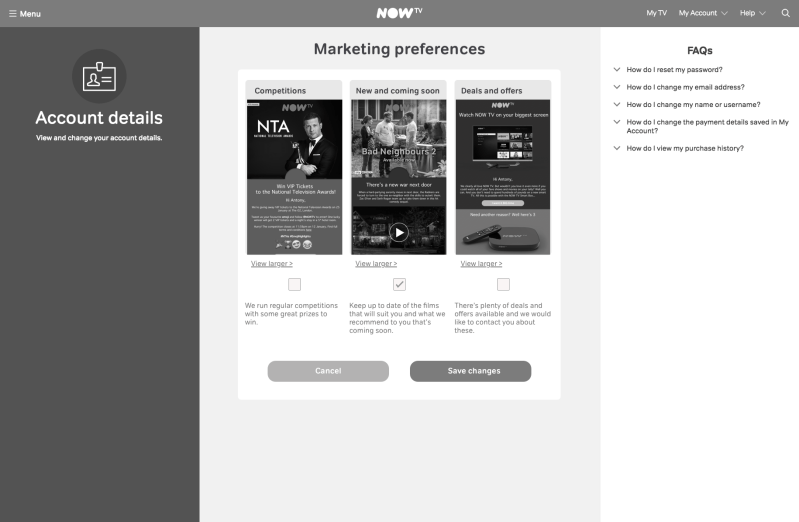
2. Examples of messages
Pros
- Gives users context of the types of messaging
- Preview to understand if relevant
- User doesn’t have to completely opt out
Cons
- Dependant on granularity of messages
- Subjective of what examples would reflect
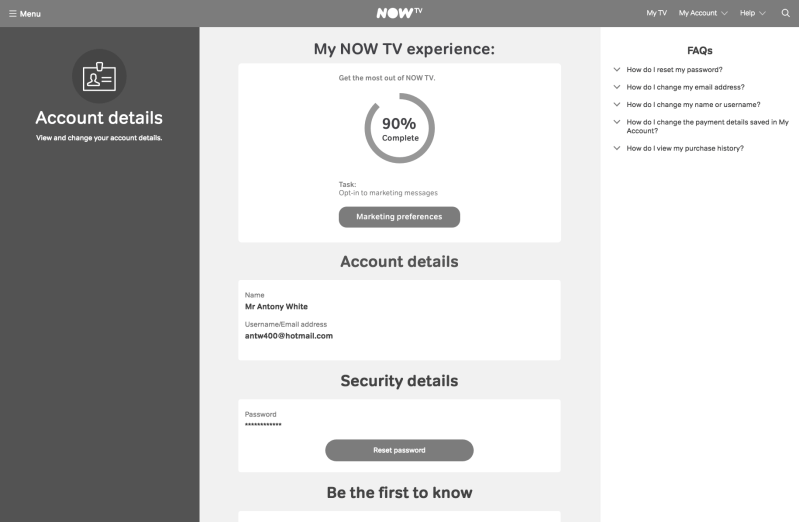
3. Gamified My Account
Pros
- Pushes user to explore marketing preference centre
- Sense of achievement
- Exposure of marketing messages within My Account
Cons
- Users who do not want to opt-in will never complete tasks
- Doesn’t make messages more engaging
4. Transparency
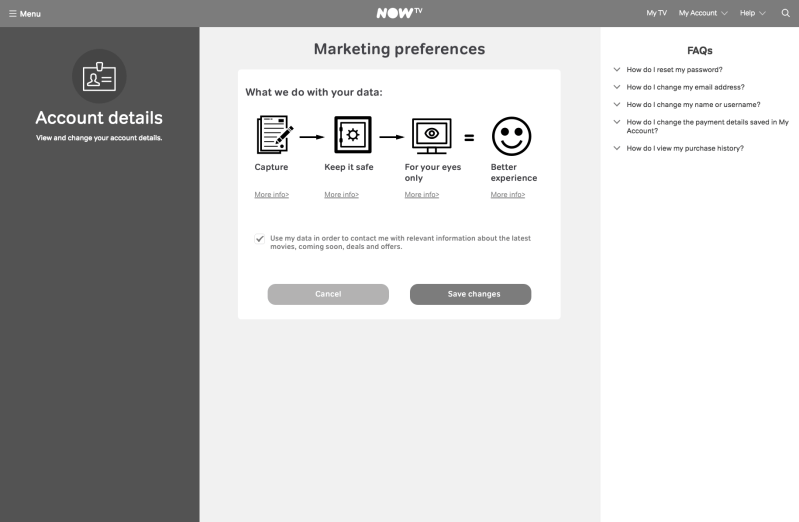
Pros
- Peace of mind
- Encouraging
- Good reflection of brand
Cons
- Could make this section more complicated from a users perspective
- User can still opt out completely
5. Frequency visualiser

Pros
- Interactive and playful
- Clarity of how many messages
Cons
- Most risky
- What we feel is a small amount maybe a large amount for the user
- Does not focus on the message content
- Could be seen as fiddly
6. Snooze
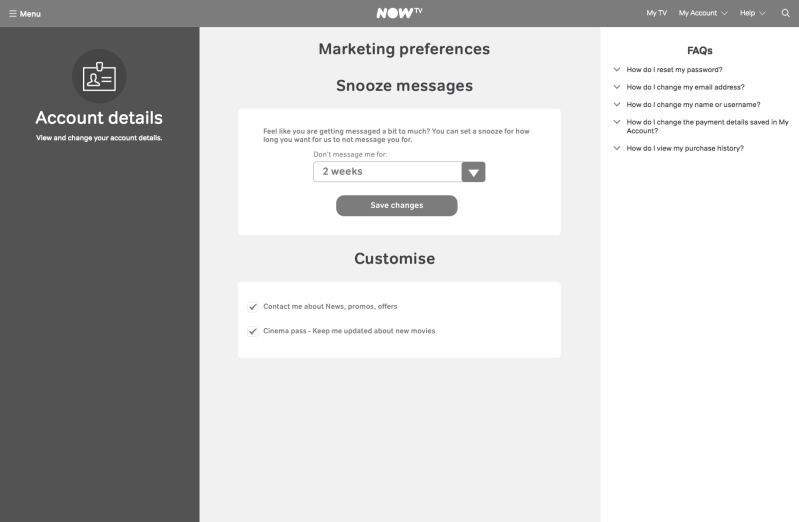
Pros
- Safety net for users not to fully opt-out
- Analytics implemented to understand the general frequency users set
Cons
- Dependant on tech
Playful concepts and prototyping
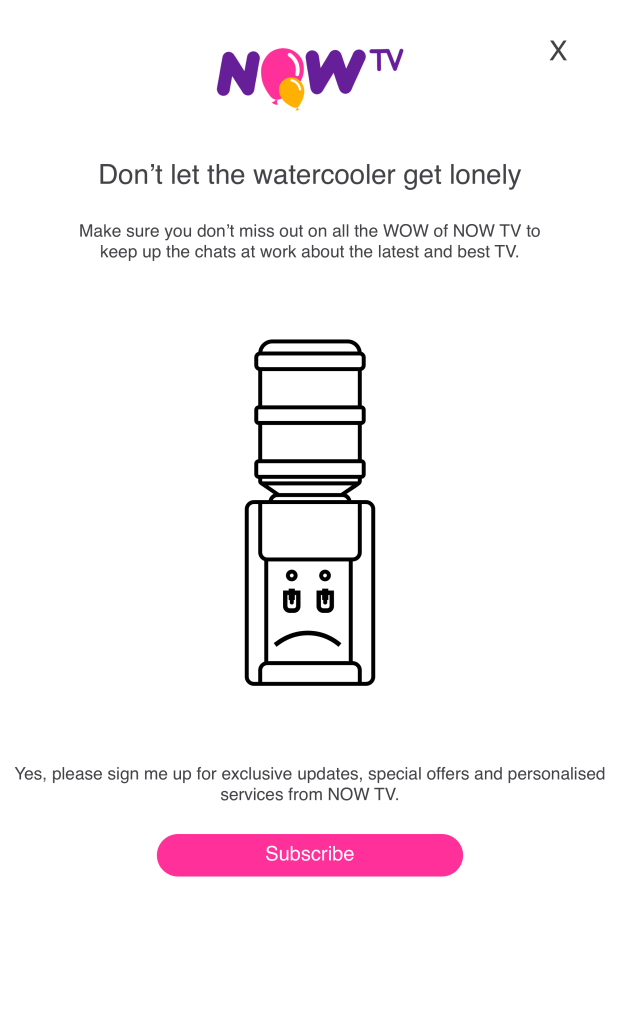
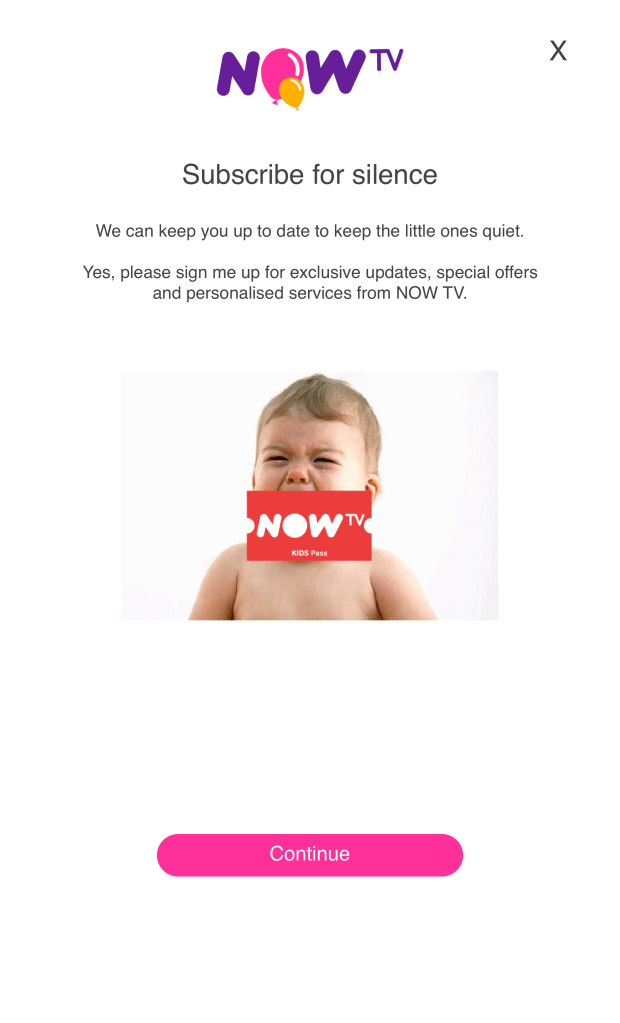
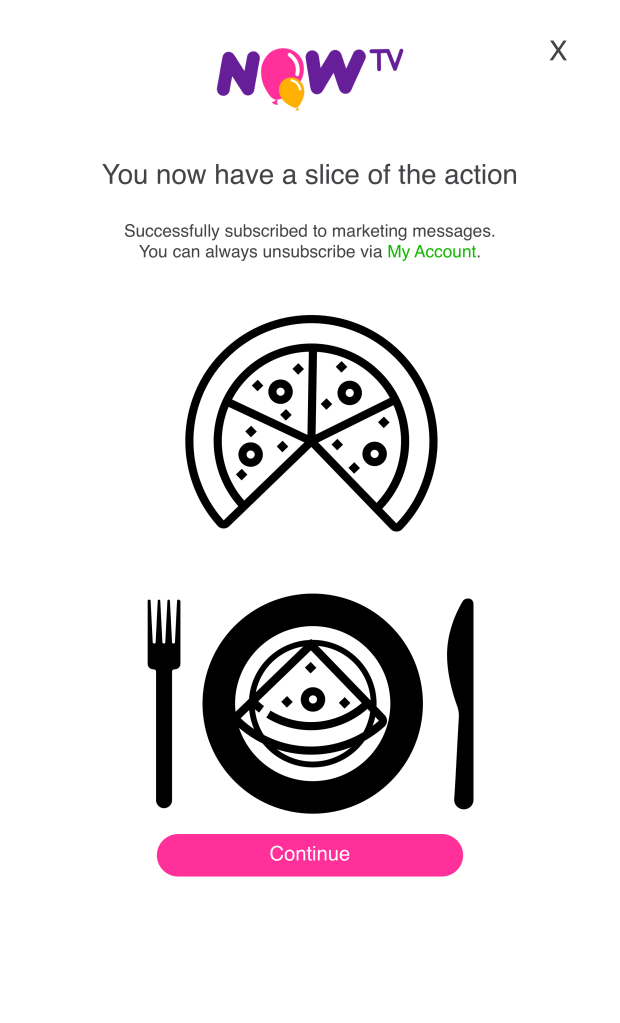
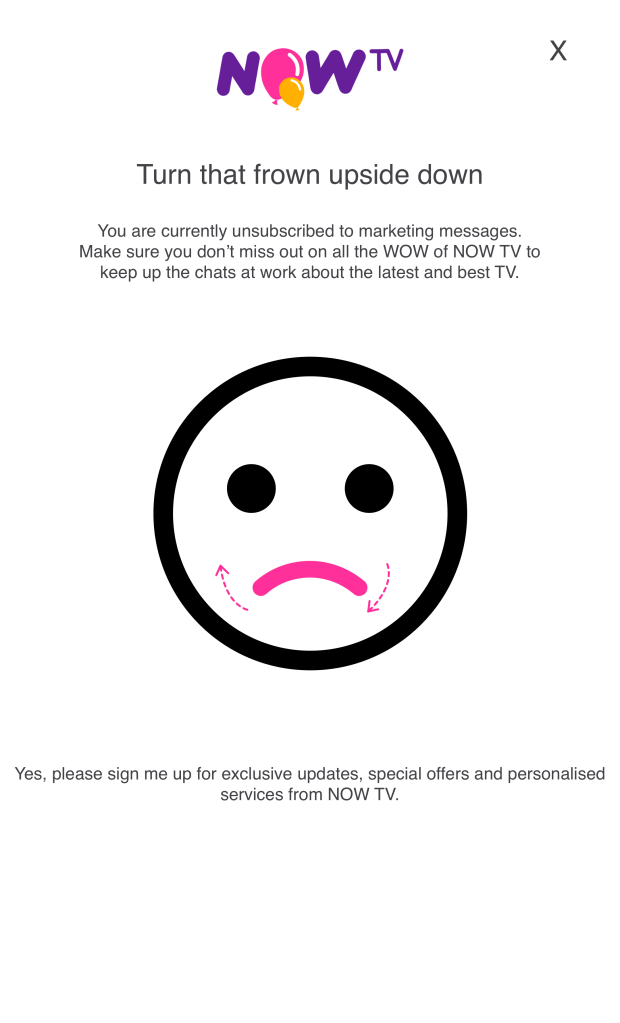
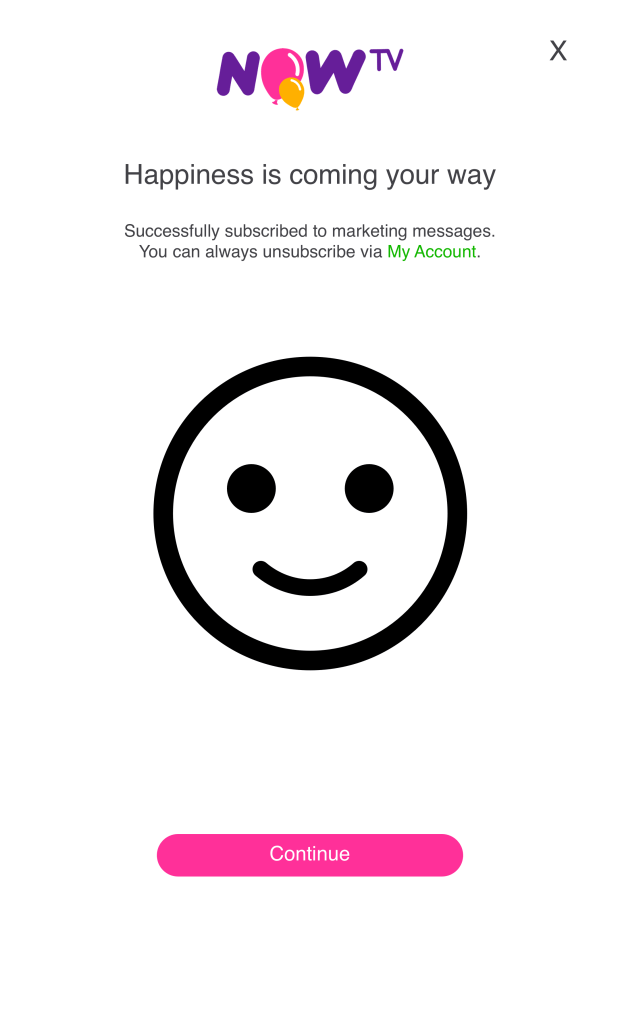
The preference centre was one area to look into, but there were more other engaging touch points where we could potentially do something a bit more fun when it came into opt-ing into to marketing preferences.
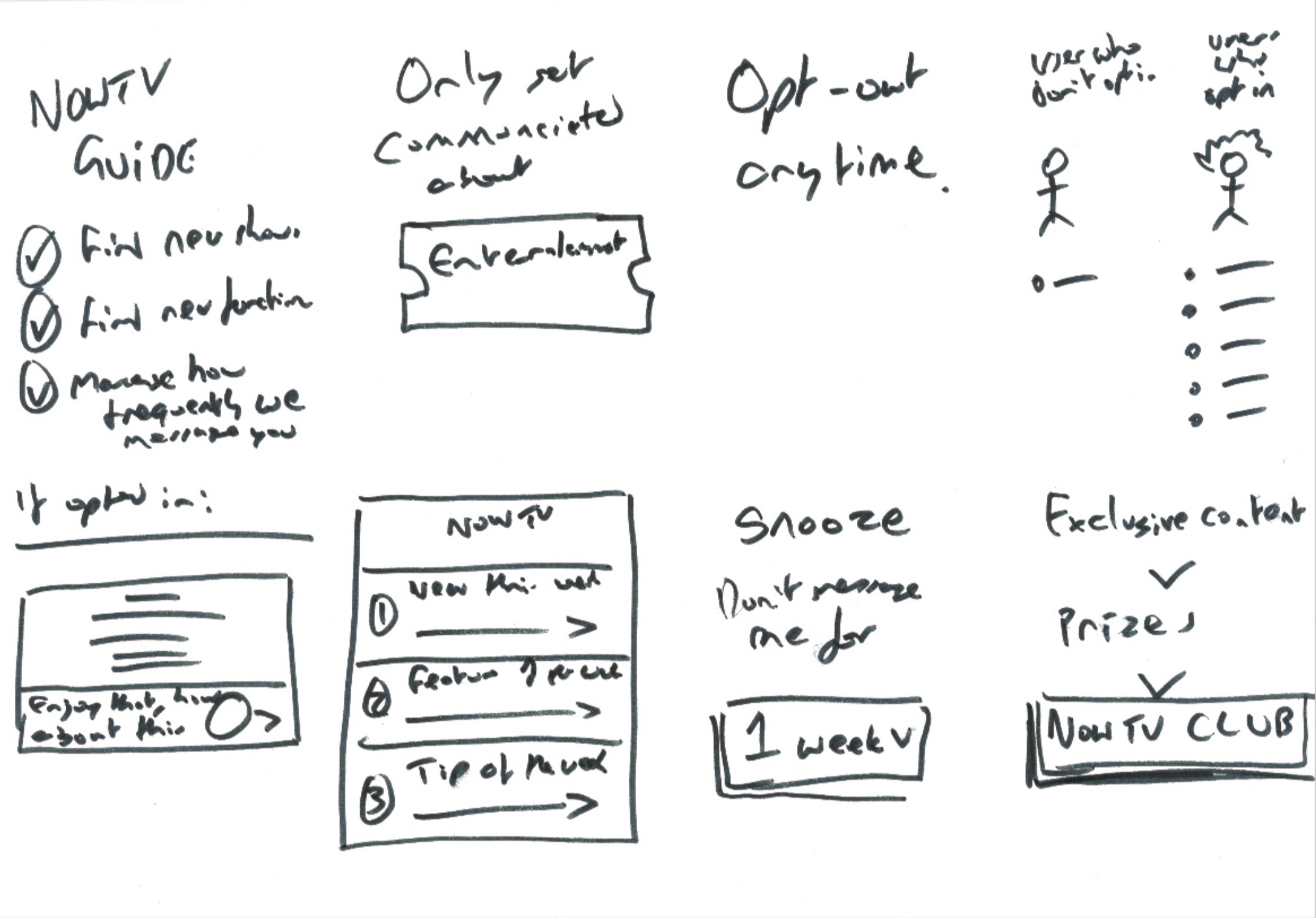
I began to create some more interesting ideas to then prototype with animation to help communicate with stakeholders on the project.




User research
Phase 1 – Understand (Depth interviews)
Research was conducted later on in the project to get users view on marketing preference to understand why they opt-in, don’t opt-in or opt-out. The research was collaborative between myself and the research team and the interviews were conducted over Skype by the head of research.
Research objectives
- To better understand why customers (prospects and existing) opt-in and opt-out for receiving communications.
- What prompts customers to sign up for receiving communications?
- Specifically regarding NOW TV communications, how do customers want to receive communications and what type of communications would they like to receive?
- How often would customers want to receive communications?
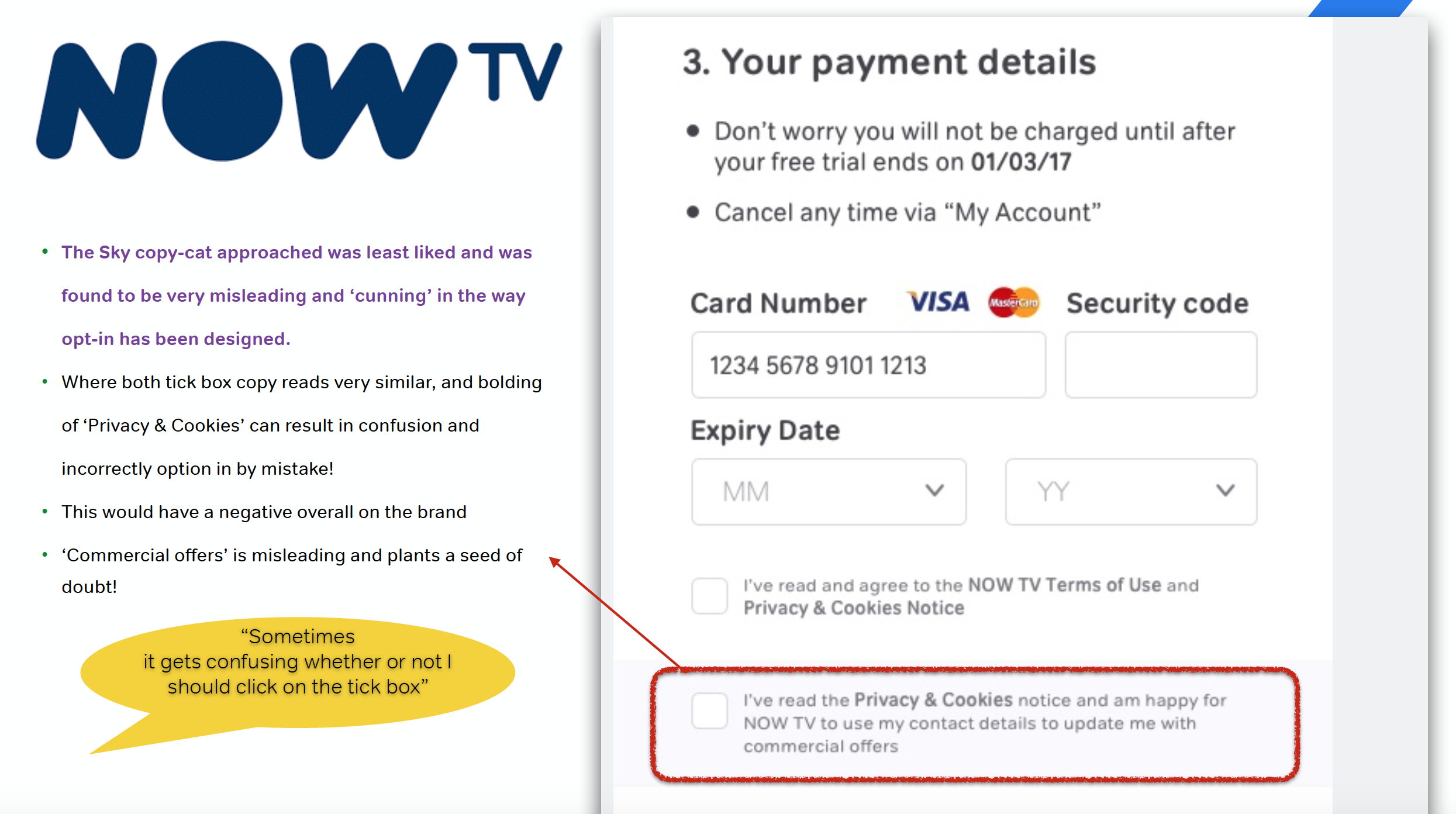
Copy should include words like ‘relevant’, ‘exclusive’ and ‘personalised’ in order to entice customers to opt-in
Conclusions
- Customers who have chosen to opt out are simply not interested in opting in and any information they want to seek about new shows and offers, they will happily seek themselves.
- Email is the best way to communicate information on new content, offers and reminders, however, customers do not want to be bombarded with daily or weekly emails. 1-2x per month is sufficient.
- Customers who are inclined to opt in to comms, would be more open to doing so if we present enticing messaging around key words like ‘exclusive’. ‘personalised’ and ‘you may opt out at any time’ will very much appeal over misleading and vague messaging. This should be considered in our design for sign up.
- Next steps? Further user research on NOW TV specific designs (opt-in / out during sign up and within preference centre.
Further research
I wrote up a research plan with our head of research at NOW TV. However, I did not finish this project due to leaving NOW TV. However this is the rest of the testing plan:
Phase 2: Quantify (Quantitative survey)
The goal of this phase would be to quantify the insights that would be collated from Phase 1.
Phase 3: Validate (Usability testing)
• 6x new customers
(evaluate opt-in journeys during sign up (1-2 concepts) with new customers)
• 6x existing customers
(evaluate opt-in journeys within NOW TV My Account (1-2 concepts) with existing customers)
Ways of working

As a final note, here is a screen shot of my ways of working on projects at NOW TV. I use Trello as a way to capture decisions made and discussions as well as documenting my work based on the ‘double diamond design process’. Additionally I had a column of Next Steps that included dates for deadlines which members of the team and my manager can view at any time to see what I am currently working on .
Other NOW TV projects
 Antony J White